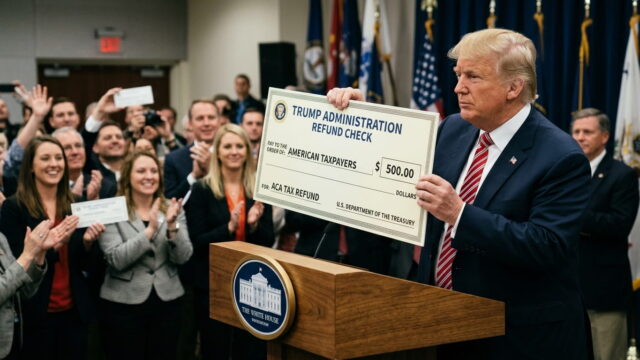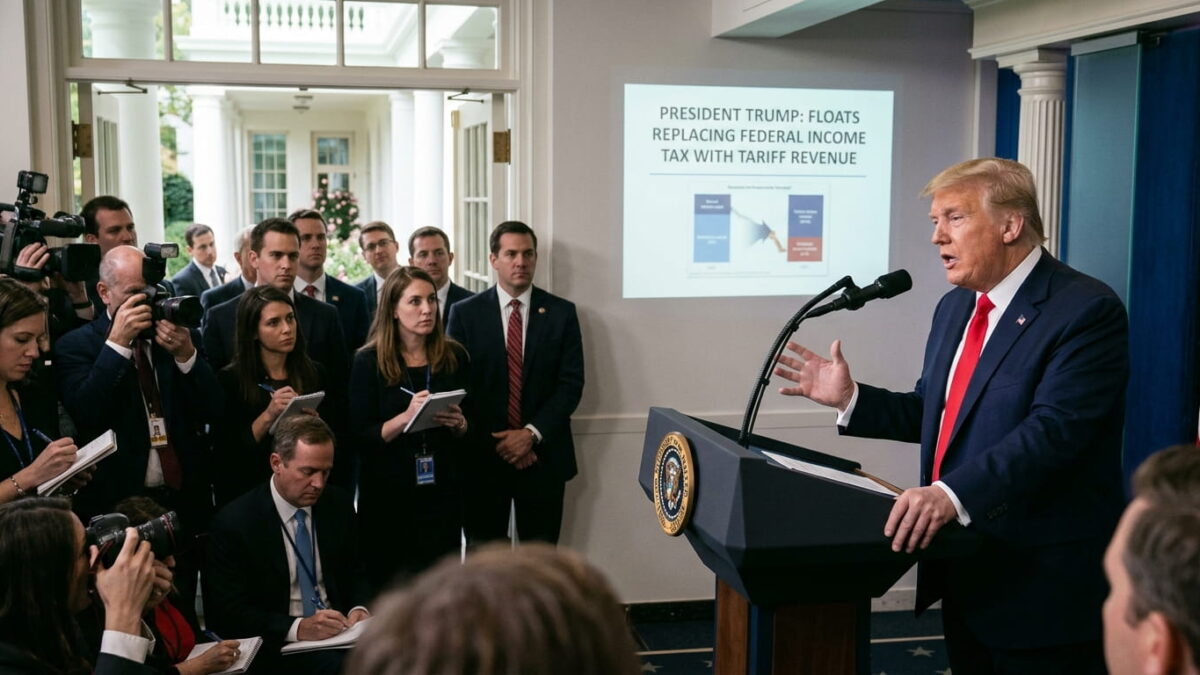
President Donald Trump has floated a policy proposal to eliminate or significantly reduce the individual federal income tax and replace the lost revenue with tariffs on foreign imports. The proposal, outlined during legislative discussions and public policy addresses, marks a major shift toward late-19th-century American trade and tax models.
Proponents argue that relying on tariffs would boost domestic manufacturing and shift tax burdens onto foreign producers. However, nonpartisan economists and tax policy experts point out significant arithmetic and structural hurdles to fully funding the federal government through import duties alone.
Key Facts at a Glance
- Current Revenue: The individual federal income tax generates approximately $2.2 trillion to $2.5 trillion annually, accounting for roughly half of total federal revenue.
- Import Volume: Total U.S. goods imports average around $3 trillion annually.
- Math Dynamic: Offsetting individual income tax entirely would require an average tariff rate exceeding 80% to 100% across all imported goods, assuming consumer demand remains constant.
- Economic Impact: Economists warn that high baseline tariffs function as a consumption tax, potentially raising prices for domestic consumers while risking retaliatory trade measures from foreign partners.
The Core Policy Concept
The administration’s proposal envisions a gradual pivot away from direct income taxation in favor of external border adjustments. Proponents invoke economic policy from the era between 1870 and 1913, when the United States relied primarily on customs duties rather than income taxes to fund federal operations.
Under the proposed structure, foreign goods entering domestic ports would face substantial tariff surcharges. The goal is twofold: incentivize companies to build manufacturing plants inside the United States and fund federal services using revenue collected at customs checkpoints.
Economic Feasibility and Revenue Analysis
Tax analysts from nonpartisan organizations—including the Tax Foundation, Penn Wharton Budget Model, and the Congressional Budget Office (CBO)—have evaluated the math behind replacing income tax with import duties.
To replace the $2.2+ trillion generated by personal income taxes, the federal government would need to levy high double-digit duties across all imported items. However, economic models indicate a feedback loop known as “Laffer curve effects” in international trade:
- Import Contraction: Raising tariffs sharply increases the cost of foreign goods, leading to a substantial drop in overall import volume as consumers and businesses reduce purchases or seek domestic alternatives.
- Revenue Cap: As import volume shrinks, total customs collections decline, making it difficult to sustain target revenue goals solely through higher rates.
- Consumption Tax Shift: Because tariffs are paid by importing entities at the border and typically passed down through supply chains, the policy shifts the federal tax burden from a progressive income scale toward a broad consumption-based model.
Industry and Policy Reactions
Congressional Republicans have expressed varied views on the proposal. Supply-side advocates praise the idea of slashing marginal income tax rates to zero, arguing it would unleash domestic economic growth and investment. Fiscal conservatives and Democrats have raised concerns regarding the federal deficit, national debt service, and inflation risks.
Manufacturing organizations support targeted protection for critical supply chains, but retail associations and technology groups caution that broad tariffs on consumer electronics, apparel, and agricultural imports could trigger price increases for working families.
What Happens Next
Any structural change to the U.S. tax code requires legislative authorization from Congress through the House Ways and Means Committee and the Senate Finance Committee. While executive actions permit targeted tariffs under national security and trade authority frameworks, repealing or modifying federal income tax provisions requires statutory tax reform legislation.