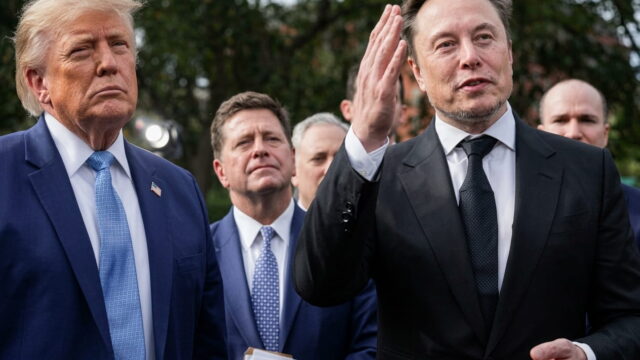
Standing alongside President Donald Trump and a cohort of Silicon Valley executives outside the White House, xAI and Tesla CEO Elon Musk actively supported an official pivot in national nomenclature, agreeing that the tech industry and federal government should phase out the term “Artificial Intelligence” in favor of “Super Intelligence” (SI).
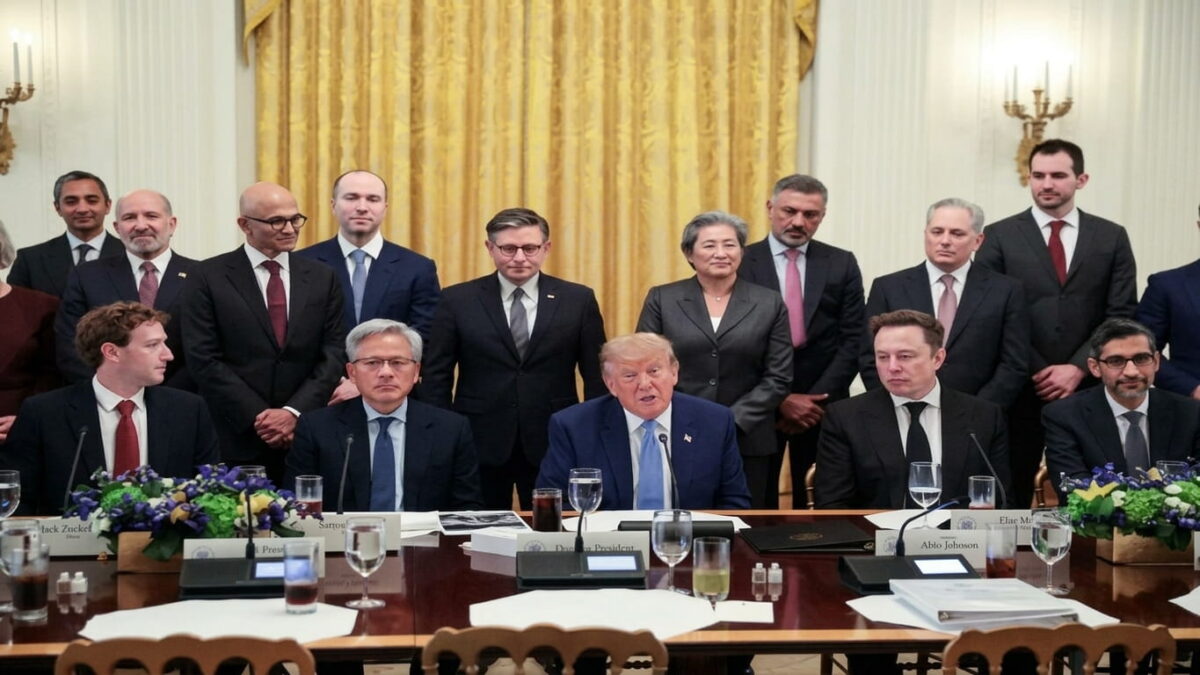
The high-profile discussion took place following the administration’s “Super Intelligence Luncheon,” where top executives signed a voluntary governance framework dubbed the White House Accord on Super Intelligence. During the post-event media session, Elon Musk discusses changing the name from Artificial Intelligence to Super Intelligence, briefly catching himself mid-speech to adopt the new “SI” acronym endorsed by the White House.
The Rationale Behind the “Super Intelligence” Shift
The decision to officially abandon “AI” in favor of “SI” reflects a broader narrative pushed by both executive officials and industry leaders that the technology has evolved far beyond mere automated algorithms.
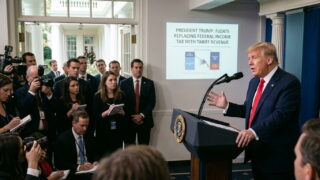
- “It Isn’t Artificial”: During the press gathering, President Trump noted that industry leaders unanimously agreed that modern neural networks are no longer accurately described as “artificial”. “We’re going to be renaming it Super Intelligence—officially renaming it,” Trump stated, confirming an executive directive instructing federal agencies to adopt “SI” in official documentation.
- Musk’s Self-Correction: While detailing the economic trajectory of frontier computing, Musk initially referred to “AI” before pausing to correct his terminology. Emphasizing the transition to “SI,” Musk argued that the technological leap will fundamentally reshape global economics, shifting human society toward unprecedented productivity.
Musk Highlights “Age of Abundance” Under SI
In addition to supporting the terminology rebrand, Musk shared an optimistic vision for how super-intelligent systems will transform labor markets and economic security.
Addressing reporters alongside Meta CEO Mark Zuckerberg, NVIDIA CEO Jensen Huang, and Google CEO Sundar Pichai, Musk emphasized that the rapid arrival of SI will transcend traditional social safety nets.
“I think my far most likely outcome is an age of abundance, where we don’t have just a universal basic income, we have universal high income,” Musk stated during the press gaggle.
Musk noted that as super-intelligent systems scale across energy grids, robotics, and advanced software, the cost of goods and services will drop dramatically, enabling higher living standards worldwide.
Regulatory Implications and Industry Unity
The discussion over the “Super Intelligence” name change coincided with the signing of the White House Accord, a self-regulatory agreement focused on internal safety audits, biosecurity evaluations, and third-party red-teaming for advanced models.
While some critics view the official renaming as a symbolic rebrand, executives present at the White House framed it as a necessary shift in perspective. By defining the technology as “Super Intelligence,” both policymakers and developers aim to establish guardrails commensurate with systems that rival or exceed human capability across critical domains.
Key Takeaways:
- Elon Musk joined President Donald Trump and tech leaders at the White House to support shifting terminology from “Artificial Intelligence” (AI) to “Super Intelligence” (SI).
- Executive branch directives instruct federal agencies to adopt “SI” across non-statutory communications.
- Musk asserted that the arrival of Super Intelligence will usher in an “age of abundance” featuring universal high income.
Sources & References:
- NDTV: Trump Announces US To Rename AI To ‘Super Intelligence’ (Published Sept. 30, 2026)
- The Guardian: Trump announces vague ‘morally binding’ AI deal among tech CEOs for ‘tremendous self-policing’ (Published Sept. 30, 2026)
- The Independent: Trump renames AI to ‘super intelligence’ (Published Sept. 30, 2026)