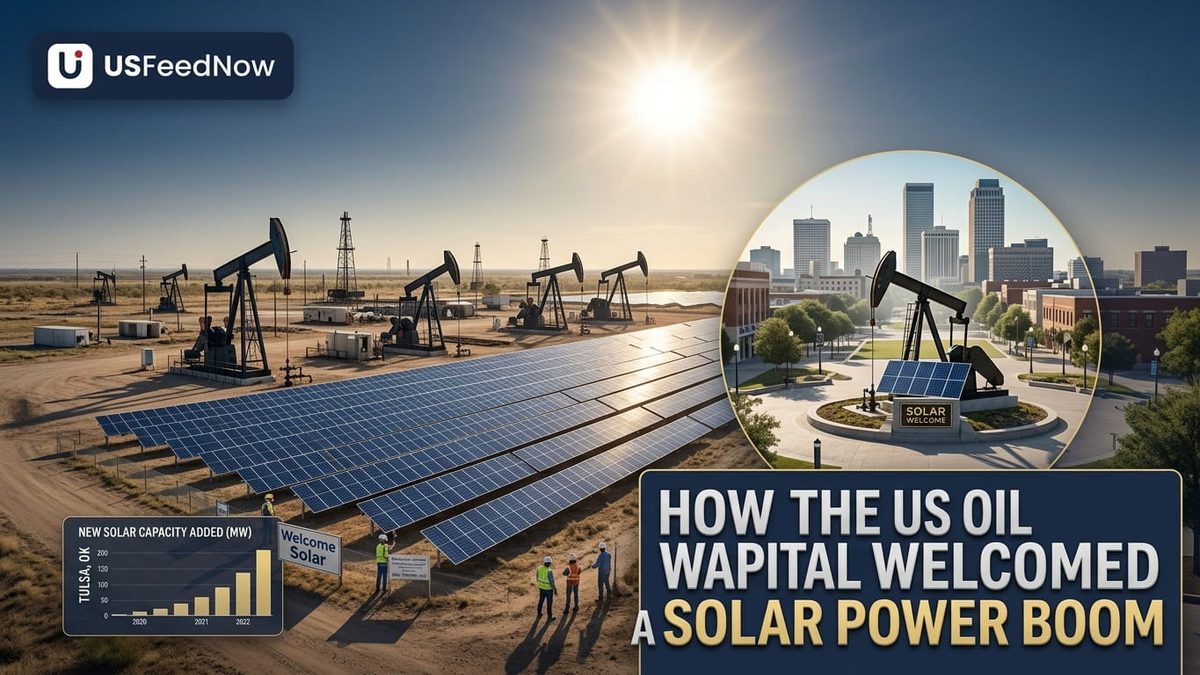
A quiet energy revolution has reshaped the open plains of Texas. Long celebrated as the undisputed oil capital of the United States, the Lone Star State has rapidly expanded its renewable footprint, overtaking traditional clean-energy strongholds like California in utility-scale solar generation.
Driven not by government climate mandates, but by favorable economics, deregulation, and vast geographic assets, the state responsible for building the modern petroleum era is now powering its electric grid with unprecedented amounts of sunshine. Understanding how the oil capital of the US welcomed a solar power boom reveals a pragmatic business story where market competition and grid demand trumped political ideology.
Market Economics and ERCOT Drive the Solar Expansion
Unlike most states, Texas operates its own independent electricity grid, managed by the Electric Reliability Council of Texas (ERCOT). The ERCOT market operates on an energy-only, deregulated model where power producers compete purely on generation costs.
As global supply chains brought down the price of solar photovoltaic modules over the last decade, solar quickly became one of the cheapest forms of new electricity generation to build and operate.
According to data from the U.S. Energy Information Administration (EIA), solar power generation in Texas has surged dramatically, putting solar on track to surpass coal in the state’s total annual power generation mix. In 2021, natural gas generated 44% of ERCOT’s power, while solar accounted for just 4%. By 2026, solar’s share had climbed toward 12%, while coal’s share dropped steadily to 13%. EIA projections indicate developers plan to add over 11,000 megawatts of utility-scale solar capacity annually to the Texas grid.
For private developers and independent power producers, building solar farms across sun-drenched regions like West Texas and Uvalde County offered unmatched financial returns.
Solving the Heat: Why Texas Needs Midday Power
Texas experiences some of the most intense summer heatwaves in North America, pushing electricity demand to record highs as millions of residential and commercial air conditioning units run around the clock.
Historically, these demand spikes forced grid operators to rely on expensive natural gas “peaker” plants to avoid rolling blackouts. Solar energy provided a direct solution:
- Perfect Operational Alignment: Solar output naturally reaches its peak during the hottest hours of the day, exactly when electricity demand on ERCOT hits its ceiling.
- Price Suppression: By dumping thousands of megawatts of cheap electricity into the wholesale grid during peak afternoon hours, solar farms prevent severe price spikes, benefiting both power retailers and consumers.
- Grid Resilience: Combined with large-scale battery storage installations, solar allows the grid to capture midday generation and discharge it into the late evening as the sun sets.
How the Oil Capital Adapted Its Infrastructure
Texas did not need to construct an entirely new infrastructure to support its clean energy shift. Instead, the state leveraged assets originally built for its oil, gas, and wind sectors:
1. Landowners and Rural Lease Revenues
In rural communities where oil derricks and cattle ranching historically provided economic stability, landowners have embraced solar leasing. Solar developers pay long-term, guaranteed monthly lease rates per acre, providing farmers and ranchers with steady income that acts as a hedge against volatile crop prices and oil market downturns.
2. The CREZ Transmission Advantage
Over a decade ago, Texas invested billions in the Competitive Renewable Energy Zones (CREZ) initiative—a massive infrastructure project that built high-voltage power lines connecting remote West Texas to population centers like Dallas, Fort Worth, Austin, and San Antonio. Originally built to carry wind power, these transmission lines gave new solar projects immediate, low-cost access to the state grid.
3. Energy Majors Reallocate Capital
Houston, long recognized as the energy capital of the world, has seen major petroleum corporations, engineering firms, and trading desks pivot toward renewable development. Major energy producers have acquired solar developers, signed power purchase agreements (PPAs), and deployed engineering talent to build utility-scale solar projects alongside traditional oilfield assets.
Looking Ahead: The Future of the Texas Energy Mix
While solar energy continues its rapid expansion, natural gas remains the primary baseline source for electricity generation across Texas. State lawmakers and grid officials continue to debate how to balance quick-responding renewable power with dispatchable thermal generation to guarantee year-round reliability.
Nevertheless, the trajectory is clear. By allowing market competition to dictate energy growth, the state that defined 20th-century fossil fuel production has established itself as an unexpected leader in 21st-century solar power.
Key Takeaways:
- Texas has become the leading U.S. producer of solar-farmed electricity, driven by market competition and low generation costs rather than government portfolio mandates.
- Data from the EIA indicates solar generation is on pace to exceed coal in ERCOT’s power generation mix.
- Solar energy aligns with Texas summer air conditioning demand, supplying cheap power during peak consumption hours and stabilizing the state’s independent power grid.
Sources & References:
- U.S. Energy Information Administration (EIA): Solar to surpass coal in Texas power generation, EIA reports (Published May 13, 2026)
- U.S. Energy Information Administration (EIA): Texas State Energy Profile & Analysis (Updated August 21, 2025)
- Greater Houston Partnership: Houston Energy Transition and Solar Growth Overview (Published April 9, 2024)